Expertise 03
A product that absorbs change instead of fighting it.
Building digital products that are robust, modular and maintainable.
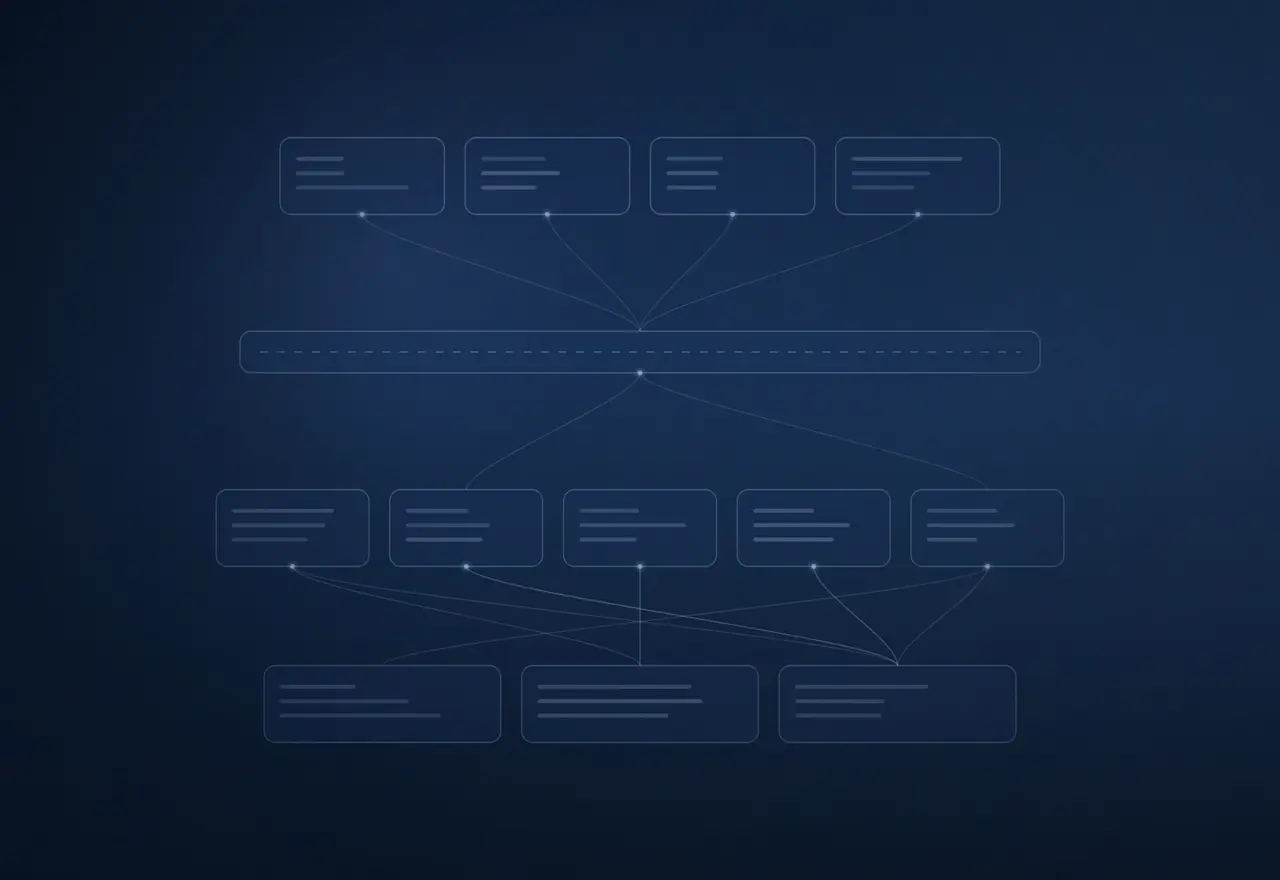
The cost of an application is paid after go-live.
Software lives far longer than it takes to write. Structural decisions — domain boundaries, API contracts, data model, authentication strategy — determine the cost of change for years.
ZERONES designs applications with explicit boundaries: modules that can evolve separately, stable interfaces, and operations planned at design time rather than bolted on afterwards.
Scope
What an engagement covers
From an internal business application to a SaaS platform serving several organisations.
-
Business applications
Digitising an existing process, with its rules, its roles and its edge cases.
-
SaaS platforms
Products serving several organisations, with subscription, role and account lifecycle management.
-
Multi-tenancy
Data and configuration isolation between customers, chosen against the level of separation required.
-
APIs
Explicit, versioned and documented contracts, designed to be consumed by other teams.
-
Integrations
Connecting to existing systems — ERP, CRM, internal tools — without tight coupling.
-
Web applications
Responsive, accessible and tested interfaces built for daily professional use.
-
Mobile applications
Where field usage justifies it: mobility, offline use, data capture.
-
Data platforms
Data models, ingestion pipelines and analytical output built alongside the application.
-
Security
Authentication, fine-grained authorisation, secret management and minimal exposure by default.
-
Audit trail
A history of sensitive actions, usable for audits or incident analysis.
-
Modular architecture
A structure that allows part of the system to be replaced without rewriting all of it.
Diagram
A legible application architecture
Layers with distinct responsibilities, connected by stable contracts.
-
Interfaces
Web, mobile, partner access.
-
API
Versioned, documented contracts.
-
Business domains
Rules, permissions, lifecycles.
-
Data
Model, history, traceability.
-
Integrations
Third-party systems and outbound flows.
-
Operations
Logging, measurement, monitoring.
Expected outcome
What changes over time
-
Cheaper change
Adding a feature does not require reopening the whole system.
-
An operable product
Monitoring, backups and procedures are in place before go-live.
-
A handover-ready codebase
Code, decisions and contracts are documented for whoever takes the product on.
A business need to turn into a product?
Describe the process and its users, and we will frame the scope, the architecture and the steps.